
KALIMANTAN The Lungs of the Earth
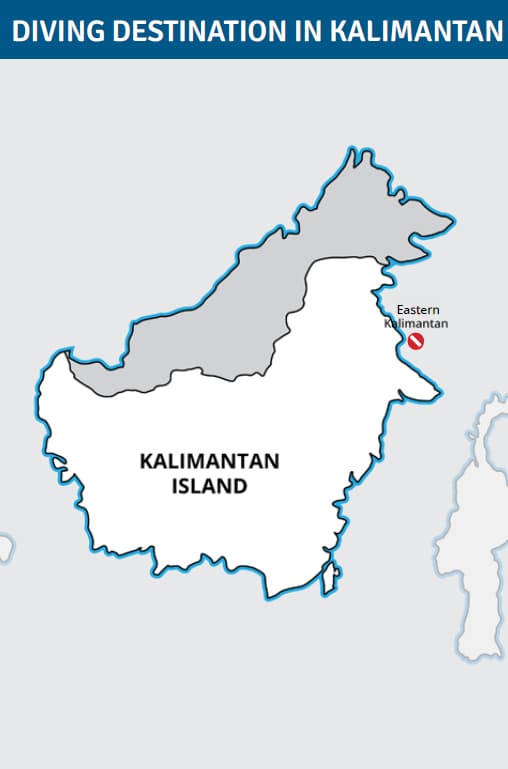 Kalimantan, the Indonesian part of Borneo—the world’s third-largest island— covers around 580,000 km² but is home to just 12 million people. Much of its interior remains pristine, sheltering some of the planet’s most crucial rainforests, often called the “lungs of the Earth.” These forests play a vital role in absorbing carbon, preserving biodiversity, and providing refuge for endangered species, such as orangutans and clouded leopards. Their connection to coastal ecosystems also supports regional ecological health. Eastern Kalimantan, particularly around the Derawan Islands, offers exceptional diving. Rich coral reefs, diverse marine life, and sites like Turtle Town and Karang Uncharted make it a haven for underwater explorers. Extensive mangroves and strong conservation efforts further establish it as a top choice for eco-conscious travelers.
Diving Overview
Diving in Kalimantan promises an extraordinary underwater adventure, though it requires more planning than popular spots like Bali, where dive trips and accommodations are often easily arranged on arrival.
Diving Conditions
Kalimantan offers diverse and unspoiled dive sites, from vibrant coral gardens to the unique marine ecosystems of the Derawan Archipelago, including Maratua, Kakaban, and Sangalaki. While dive centers and infrastructure are limited, careful planning ensures access to some of Indonesia’s most stunning and secluded underwater experiences
Dive Site and Marine Life Highlights in KALIMANTAN
The Derawan Archipelago in Eastern Kalimantan offers some of Indonesia’s most diverse and rewarding diving and snorkeling experiences, spanning the islands of Derawan, Sangalaki, Kakaban, and Maratua. Derawan is renowned for its rich marine life and turtle nesting beaches, while Sangalaki boasts vibrant reefs and year-round sightings of the graceful reef mantas. Kakaban stands out with its one-of-a-kind stingless Jellyfish Lake and thrilling pelagic encounters. Maratua offers exhilarating drift dives, dramatic drop-offs, and the opportunity to see large marine species, including barracuda, reef sharks, and even seasonal whale sharks. Snorkelers and freedivers will find plenty to love here too—calm coral gardens, surface-level manta encounters, and Kakaban’s surreal jellyfish lagoon.
KALIMANTAN The Lungs of the Earth
Kalimantan, the Indonesian part of Borneo—the world’s third-largest island— covers around 580,000 km² but is home to just 12 million people. Much of its interior remains pristine, sheltering some of the planet’s most crucial rainforests, often called the “lungs of the Earth.” These forests play a vital role in absorbing carbon, preserving biodiversity, and providing refuge for endangered species, such as orangutans and clouded leopards. Their connection to coastal ecosystems also supports regional ecological health. Eastern Kalimantan, particularly around the Derawan Islands, offers exceptional diving. Rich coral reefs, diverse marine life, and sites like Turtle Town and Karang Uncharted make it a haven for underwater explorers. Extensive mangroves and strong conservation efforts further establish it as a top choice for eco-conscious travelers.
Diving Overview
Diving in Kalimantan promises an extraordinary underwater adventure, though it requires more planning than popular spots like Bali, where dive trips and accommodations are often easily arranged on arrival.
Diving Conditions
Kalimantan offers diverse and unspoiled dive sites, from vibrant coral gardens to the unique marine ecosystems of the Derawan Archipelago, including Maratua, Kakaban, and Sangalaki. While dive centers and infrastructure are limited, careful planning ensures access to some of Indonesia’s most stunning and secluded underwater experiences
Dive Site and Marine Life Highlights in KALIMANTAN
The Derawan Archipelago in Eastern Kalimantan offers some of Indonesia’s most diverse and rewarding diving and snorkeling experiences, spanning the islands of Derawan, Sangalaki, Kakaban, and Maratua. Derawan is renowned for its rich marine life and turtle nesting beaches, while Sangalaki boasts vibrant reefs and year-round sightings of the graceful reef mantas. Kakaban stands out with its one-of-a-kind stingless Jellyfish Lake and thrilling pelagic encounters. Maratua offers exhilarating drift dives, dramatic drop-offs, and the opportunity to see large marine species, including barracuda, reef sharks, and even seasonal whale sharks. Snorkelers and freedivers will find plenty to love here too—calm coral gardens, surface-level manta encounters, and Kakaban’s surreal jellyfish lagoon.
EASTERN KALIMANTAN (DERAWAN, SANGALAKI, KAKABAN & MARATUA)
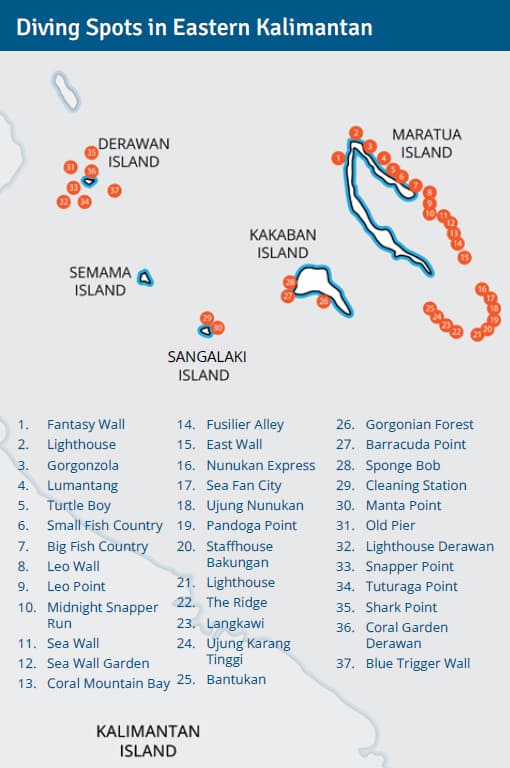 Eastern Kalimantan, on the eastern coast of Borneo, is rich in Dayak heritage, lush rainforests like Kutai National Park—home to wild orangutans—and the remote diving paradise of the Derawan Islands. This offshore archipelago includes Derawan, Sangalaki, Maratua, and Kakaban, each offering world-class diving in pristine waters. Sangalaki is renowned for its resident manta rays, often seen yearround at cleaning stations. Kakaban features the surreal Jellyfish Lake, where snorkelers can swim among four species of nonstinging jellyfish. The region also offers turtle nesting beaches, whale shark encounters, macro dives at Derawan and Samama, dramatic wall dives at Maratua, and even tiger shark sightings near Pulau Sambit. Accommodations range from shore-based resorts to liveaboard expeditions. With its equatorial location just 2° north of the equator, Sangalaki enjoys year-round stable diving conditions, largely unaffected by Indonesia’s monsoons. Kalimantan experiences a wet season from December to March, with dry conditions prevailing for the remainder of the year and consistently warm temperatures between 28°C and 30°C. Offshore breezes help keep humidity lower than on the mainland.
How To Get There
- Fly to Berau Kalimarau Airport (BEJ) or Tarakan Juwata Airport (TRK)
- Transfer by car to Tanjung Batu (2.5 hours from BEJ or 11 hours from TRK) for boat transfer
- Boat transfer to the Derawan Islands, arranged by local operators or resorts
- Take a regional flight to Maratua (RTU) from Berau (BEJ) or Samarinda Airport (AAP)
Diving Conditions
Waters around Kakaban and Maratua are generally clearer, while Sangalaki typically offers better visibility than Derawan. With calm coral gardens, surface manta encounters, and the surreal experience of snorkeling in Kakaban’s Jellyfish Lake, the archipelago is ideal for divers and freedivers of all levels. Its remote, uncrowded nature adds to its appeal as one of Indonesia’s hidden marine treasures.
Visibility : 15 - 30 m
Best Time : Mar - Oct
Stable and warm, slight cooling around Jan–Feb to 27–29°C.
Dive Site and Marine Life Highlights in Eastern Kalimantan
The Derawan Archipelago in Eastern Kalimantan delivers some of Indonesia’s most diverse diving and snorkeling across Derawan, Sangalaki, Kakaban, and Maratua. Derawan is renowned for its turtle nesting beaches and rich marine life, while Sangalaki boasts vibrant reefs and offers yearround manta sightings. Kakaban features the unique stingless Jellyfish Lake and exciting pelagic encounters. Maratua thrills with drift dives, drop-offs, and large species, including barracuda, reef sharks, and seasonal whale sharks. Snorkelers and freedivers can enjoy calm coral gardens, surface manta encounters, and Kakaban’s surreal lagoon.
EASTERN KALIMANTAN (DERAWAN, SANGALAKI, KAKABAN & MARATUA)
Eastern Kalimantan, on the eastern coast of Borneo, is rich in Dayak heritage, lush rainforests like Kutai National Park—home to wild orangutans—and the remote diving paradise of the Derawan Islands. This offshore archipelago includes Derawan, Sangalaki, Maratua, and Kakaban, each offering world-class diving in pristine waters. Sangalaki is renowned for its resident manta rays, often seen yearround at cleaning stations. Kakaban features the surreal Jellyfish Lake, where snorkelers can swim among four species of nonstinging jellyfish. The region also offers turtle nesting beaches, whale shark encounters, macro dives at Derawan and Samama, dramatic wall dives at Maratua, and even tiger shark sightings near Pulau Sambit. Accommodations range from shore-based resorts to liveaboard expeditions. With its equatorial location just 2° north of the equator, Sangalaki enjoys year-round stable diving conditions, largely unaffected by Indonesia’s monsoons. Kalimantan experiences a wet season from December to March, with dry conditions prevailing for the remainder of the year and consistently warm temperatures between 28°C and 30°C. Offshore breezes help keep humidity lower than on the mainland.
How To Get There
- Fly to Berau Kalimarau Airport (BEJ) or Tarakan Juwata Airport (TRK)
- Transfer by car to Tanjung Batu (2.5 hours from BEJ or 11 hours from TRK) for boat transfer
- Boat transfer to the Derawan Islands, arranged by local operators or resorts
- Take a regional flight to Maratua (RTU) from Berau (BEJ) or Samarinda Airport (AAP)
Diving Conditions
Waters around Kakaban and Maratua are generally clearer, while Sangalaki typically offers better visibility than Derawan. With calm coral gardens, surface manta encounters, and the surreal experience of snorkeling in Kakaban’s Jellyfish Lake, the archipelago is ideal for divers and freedivers of all levels. Its remote, uncrowded nature adds to its appeal as one of Indonesia’s hidden marine treasures.
Visibility : 15 - 30 m
Best Time : Mar - Oct
Stable and warm, slight cooling around Jan–Feb to 27–29°C.
Dive Site and Marine Life Highlights in Eastern Kalimantan
The Derawan Archipelago in Eastern Kalimantan delivers some of Indonesia’s most diverse diving and snorkeling across Derawan, Sangalaki, Kakaban, and Maratua. Derawan is renowned for its turtle nesting beaches and rich marine life, while Sangalaki boasts vibrant reefs and offers yearround manta sightings. Kakaban features the unique stingless Jellyfish Lake and exciting pelagic encounters. Maratua thrills with drift dives, drop-offs, and large species, including barracuda, reef sharks, and seasonal whale sharks. Snorkelers and freedivers can enjoy calm coral gardens, surface manta encounters, and Kakaban’s surreal lagoon.


