
SUMATRA The Natural Beauty and Exceptional Wildlife
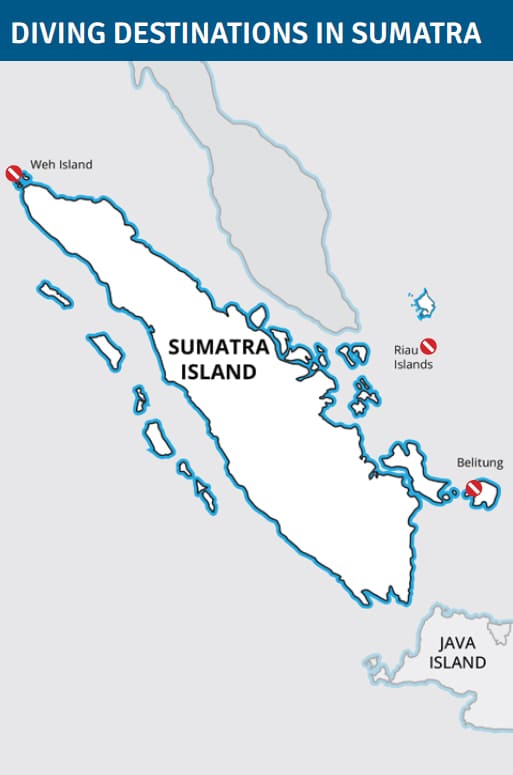 Sumatra, Indonesia’s westernmost and largest island, spans over 473,000 square kilometers and ranks as the sixth-largest island in the world. Known for its dramatic landscapes, the island features active volcanoes, crater lakes, dense jungles, and some of the world’s most pristine beaches. Its natural beauty is matched by rich biodiversity, home to critically endangered species such as orangutans, tigers, rhinos, and elephants. Sumatra is also a top destination for world-class surfing and eco-adventures. Culturally, Sumatra is remarkably diverse. From the devout Muslim communities of Aceh to the Batak Christians around Lake Toba, their people are deeply rooted in tradition and united by a strong connection to the land. Agriculture, including coffee, tea, palm oil, and spices, remains a central component of local livelihoods. Despite the devastation of the 2004 tsunami, particularly in Aceh and Pulau Weh, the region has made a remarkable recovery, standing today as a testament to the resilience and spirit of its people.
Diving Overview
From tranquil bays with shallow coral gardens to adrenaline-filled drift dives over vast reefs, Sumatra offers a diverse range of underwater experiences for divers of all skill levels. Whether you're drawn to pelagic encounters, macro photography, or marine biodiversity, the region has something for everyone. For marine megafauna, Pulau Weh in Banda Aceh is a top choice, home to manta rays, whale sharks, turtles, napoleon wrasse, barracuda, and reef sharks. Macro enthusiasts will find a haven in Belitung, renowned for its diverse array of nudibranchs and cryptic species. Belitung offers optimal conditions for underwater photographers, featuring gentle currents, exceptional visibility— particularly from May to September— and vibrant reefs. For those in search of a hidden gem, the Anambas Islands in the Riau Archipelago offer pristine reefs, crystal-clear waters, and thriving marine life. Divers can explore untouched coral gardens, encounter large pelagic species, and discover an abundance of macro life in this secluded paradise.
Diving Conditions
Sumatra offers thrilling dive experiences across Weh Island, Belitung, and Anambas Islands. Weh Island is known for its adrenaline-pumping drift dives and strong currents, especially around the full moon, providing great sightings of schooling fish and pelagics. Belitung boasts diverse dive sites, including pinnacles, granite formations, and vibrant coral gardens, with drift dives for experienced divers. Anambas, with its pristine reefs and rich marine life, offers crystal-clear waters, stunning coral gardens, and exciting drift dives, making it a top destination for adventurous divers.
Dive Site and Marine Life Highlights in SUMATRA
Sumatra is a marine biodiversity hotspot, home to a wide range of species including reef fish, molluscs, crustaceans, and cephalopods. At Weh Island, divers can encounter large pelagic species, including reef sharks, barracuda, Napoleon wrasse, manta rays, and whale sharks, alongside excellent macro life. The island’s varying currents offer thrilling dives but require caution at depth, where schooling fish and big species are often spotted. Freedivers will also appreciate the rich marine life and excellent visibility. Belitung is renowned for its vibrant coral ecosystems, tranquil waters, and diverse marine life, including nudibranchs, reef fish, sea turtles, and rare macroalgae species. Its gentle conditions make it ideal for underwater photography, while deeper drop-offs are wellsuited for freediving, especially with the support of a boat. The Anambas Islands offer crystal-clear waters, pristine reefs, and diverse dive sites, ranging from colourful coral gardens to drift dives. Divers can expect encounters with pelagic species such as reef sharks, as well as a thriving macro scene, making it a true hidden gem for underwater exploration.
SUMATRA The Natural Beauty and Exceptional Wildlife
Sumatra, Indonesia’s westernmost and largest island, spans over 473,000 square kilometers and ranks as the sixth-largest island in the world. Known for its dramatic landscapes, the island features active volcanoes, crater lakes, dense jungles, and some of the world’s most pristine beaches. Its natural beauty is matched by rich biodiversity, home to critically endangered species such as orangutans, tigers, rhinos, and elephants. Sumatra is also a top destination for world-class surfing and eco-adventures. Culturally, Sumatra is remarkably diverse. From the devout Muslim communities of Aceh to the Batak Christians around Lake Toba, their people are deeply rooted in tradition and united by a strong connection to the land. Agriculture, including coffee, tea, palm oil, and spices, remains a central component of local livelihoods. Despite the devastation of the 2004 tsunami, particularly in Aceh and Pulau Weh, the region has made a remarkable recovery, standing today as a testament to the resilience and spirit of its people.
Diving Overview
From tranquil bays with shallow coral gardens to adrenaline-filled drift dives over vast reefs, Sumatra offers a diverse range of underwater experiences for divers of all skill levels. Whether you're drawn to pelagic encounters, macro photography, or marine biodiversity, the region has something for everyone. For marine megafauna, Pulau Weh in Banda Aceh is a top choice, home to manta rays, whale sharks, turtles, napoleon wrasse, barracuda, and reef sharks. Macro enthusiasts will find a haven in Belitung, renowned for its diverse array of nudibranchs and cryptic species. Belitung offers optimal conditions for underwater photographers, featuring gentle currents, exceptional visibility— particularly from May to September— and vibrant reefs. For those in search of a hidden gem, the Anambas Islands in the Riau Archipelago offer pristine reefs, crystal-clear waters, and thriving marine life. Divers can explore untouched coral gardens, encounter large pelagic species, and discover an abundance of macro life in this secluded paradise.
Diving Conditions
Sumatra offers thrilling dive experiences across Weh Island, Belitung, and Anambas Islands. Weh Island is known for its adrenaline-pumping drift dives and strong currents, especially around the full moon, providing great sightings of schooling fish and pelagics. Belitung boasts diverse dive sites, including pinnacles, granite formations, and vibrant coral gardens, with drift dives for experienced divers. Anambas, with its pristine reefs and rich marine life, offers crystal-clear waters, stunning coral gardens, and exciting drift dives, making it a top destination for adventurous divers.
Dive Site and Marine Life Highlights in SUMATRA
Sumatra is a marine biodiversity hotspot, home to a wide range of species including reef fish, molluscs, crustaceans, and cephalopods. At Weh Island, divers can encounter large pelagic species, including reef sharks, barracuda, Napoleon wrasse, manta rays, and whale sharks, alongside excellent macro life. The island’s varying currents offer thrilling dives but require caution at depth, where schooling fish and big species are often spotted. Freedivers will also appreciate the rich marine life and excellent visibility. Belitung is renowned for its vibrant coral ecosystems, tranquil waters, and diverse marine life, including nudibranchs, reef fish, sea turtles, and rare macroalgae species. Its gentle conditions make it ideal for underwater photography, while deeper drop-offs are wellsuited for freediving, especially with the support of a boat. The Anambas Islands offer crystal-clear waters, pristine reefs, and diverse dive sites, ranging from colourful coral gardens to drift dives. Divers can expect encounters with pelagic species such as reef sharks, as well as a thriving macro scene, making it a true hidden gem for underwater exploration.
WEH ISLAND
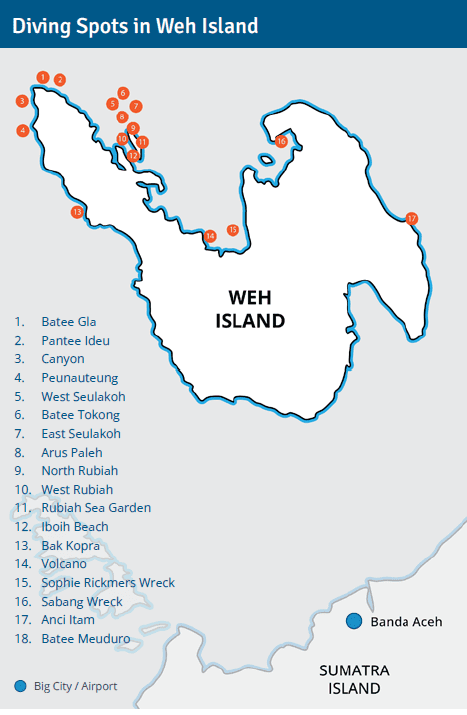 Weh Island has long been a favourite among divers and backpackers, cherished for its remote location and unspoiled charm. Getting there is part of the adventure, with the reward of tranquil beaches, lush jungle, and crystal-clear waters—or simply the chance to unwind in a hammock. Below the surface, vibrant sea fans, deep canyons, and dramatic rock pinnacles await. Divers and snorkelers can encounter majestic manta rays, whale sharks, and a wealth of marine life. As the northernmost point of Sumatra, Weh Island offers a memorable and fitting finale to any island journey.
How To Get There
- Fly to Banda Aceh Sultan Iskandar Muda International Airport (BTJ)
- Transfer by car (30 minutes) to Ulee Lheue Jetty
- Fast boat (45 minutes) or ferry (1.5 hours) to Weh Island (Balohan Jetty)
Diving Conditions
Weh Island offers some of Indonesia’s finest off-thegrid diving, perfect for those seeking uncrowded sites and rich marine life. The island caters to all experience levels, from beginners to advanced divers. Highlights include drift dives, deep wrecks, and even an underwater volcano. Strong currents bring vibrant marine activity, including both pelagics and macro species, making for challenging yet rewarding dives.
Visibility : 15 - 35 m
Best Time : Jan - Apr & Sep - Nov (Very rare cooling, slight thermoclines around July–Sept)
Dive Site and Marine Life Highlights in Weh Island
Weh Island boasts remote dive sites rich in marine biodiversity, featuring sharks, manta rays, and whale sharks, as well as schooling pelagics, diverse critters, and vibrant coral reefs nourished by nutrient-rich currents. Its variety of dive environments—including sloping reefs, drop-offs, sandy bottoms, drift dives, and wrecks— caters to divers of all experience levels. Notable sites include The Canyon, with its cave, swim-through arch, and abundant fish life; Pantee Peunateung, known for dramatic topography, colourful sea fans, and macro species; and the Sophie Rickmers wreck, a 1920s cargo ship now thriving with coral and marine life. Arus Balee impresses with its vibrant colors and diverse fish, while Batee Tokong remains a favorite for its rich marine variety. Freedivers will also find excellent opportunities to encounter large species and explore these dynamic underwater landscapes.
WEH ISLAND
Weh Island has long been a favourite among divers and backpackers, cherished for its remote location and unspoiled charm. Getting there is part of the adventure, with the reward of tranquil beaches, lush jungle, and crystal-clear waters—or simply the chance to unwind in a hammock. Below the surface, vibrant sea fans, deep canyons, and dramatic rock pinnacles await. Divers and snorkelers can encounter majestic manta rays, whale sharks, and a wealth of marine life. As the northernmost point of Sumatra, Weh Island offers a memorable and fitting finale to any island journey.
How To Get There
- Fly to Banda Aceh Sultan Iskandar Muda International Airport (BTJ)
- Transfer by car (30 minutes) to Ulee Lheue Jetty
- Fast boat (45 minutes) or ferry (1.5 hours) to Weh Island (Balohan Jetty)
Diving Conditions
Weh Island offers some of Indonesia’s finest off-thegrid diving, perfect for those seeking uncrowded sites and rich marine life. The island caters to all experience levels, from beginners to advanced divers. Highlights include drift dives, deep wrecks, and even an underwater volcano. Strong currents bring vibrant marine activity, including both pelagics and macro species, making for challenging yet rewarding dives.
Visibility : 15 - 35 m
Best Time : Jan - Apr & Sep - Nov (Very rare cooling, slight thermoclines around July–Sept)
Dive Site and Marine Life Highlights in Weh Island
Weh Island boasts remote dive sites rich in marine biodiversity, featuring sharks, manta rays, and whale sharks, as well as schooling pelagics, diverse critters, and vibrant coral reefs nourished by nutrient-rich currents. Its variety of dive environments—including sloping reefs, drop-offs, sandy bottoms, drift dives, and wrecks— caters to divers of all experience levels. Notable sites include The Canyon, with its cave, swim-through arch, and abundant fish life; Pantee Peunateung, known for dramatic topography, colourful sea fans, and macro species; and the Sophie Rickmers wreck, a 1920s cargo ship now thriving with coral and marine life. Arus Balee impresses with its vibrant colors and diverse fish, while Batee Tokong remains a favorite for its rich marine variety. Freedivers will also find excellent opportunities to encounter large species and explore these dynamic underwater landscapes.
BELITUNG
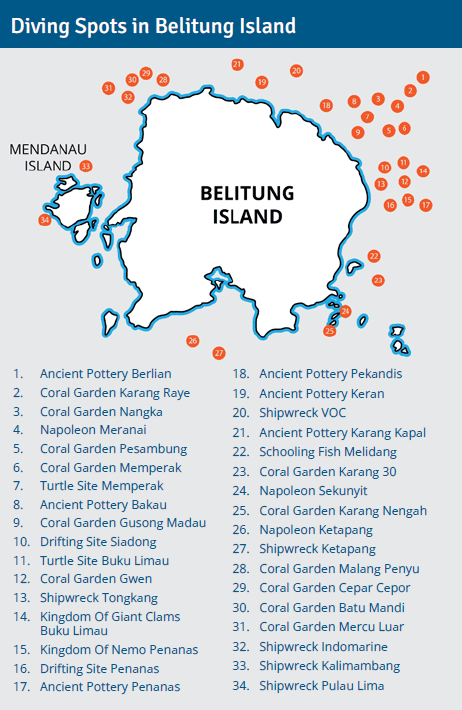 Belitung, part of the Bangka-Belitung province in Sumatra, spans 4,800 km² (1,853 square miles). The island is characterized by its sandy beaches, coral reefs, marshes, and low-lying terrain, with most areas situated below 40 meters above sea level. The Cerutuk River, navigable for 11 km, serves as the main waterway. Tanjungpandan, the island’s main town, port, and airport hub, connects visitors to the rest of Indonesia. Once known for tin mining, Belitung has transformed into a tranquil island escape. Its pristine beaches, coconut-lined shores, and the crystal-clear waters of the South China Sea offer a serene tropical experience. Dutch colonial influences are still evident, and the island's friendly and inquisitive locals further enhance the island’s peaceful atmosphere. Minimal commercial fishing allows for sustainable, fresh seafood to feature prominently in local cuisine. Beyond diving, visitors can explore wildlife-rich forests, hike in search of tarsier monkeys, or relax at Tanjung Kelayang—Belitung’s most iconic beach, renowned for its breathtaking views and laidback atmosphere.
How To Get There
- Fly to Tanjung Pandan H.A.S. HanandjoeddinInternational Airport (TJQ)
- Daily speedboats from Pangkalpinang on Bangka Island to Belitung (4 hours)
- PELNI ships from Jakarta (Tanjung Priok Port) (24 hours)
Diving Conditions
Belitung offers ideal diving conditions for all experience levels—from calm, sheltered sites perfect for beginners to deeper areas and exciting drift dives for advanced divers. Exceptional visibility reveals the island’s vibrant underwater landscapes in full clarity.
Visibility : 10 - 25 m
Best Time : Apr - Oct (Occasional upwellings June–Sept can drop to 26 °C, especially in exposed sites)
Dive Site and Marine Life Highlights in Belitung Island
Belitung offers a distinctive diving experience, shaped by underwater pinnacles and volcanic granite formations that create diverse habitats teeming with marine life. Healthy coral ecosystems support an abundance of reef fish, crustaceans, and vibrant macro species, making the region especially appealing to underwater photographers. In Belitung, Cepor Cepor features a colorful coral garden framed by granite boulders, attracting a variety of reef fish, sea urchins, and anemonefish. The Lighthouse Wreck, now richly encrusted with coral, is home to moray eels, nudibranchs, and occasional reef sharks, offering excellent opportunities for exploration. Freedivers will appreciate the region’s dramatic drop-offs and steep slopes, though caution is advised due to currents, and boat support is recommended for safety.
BELITUNG
Belitung, part of the Bangka-Belitung province in Sumatra, spans 4,800 km² (1,853 square miles). The island is characterized by its sandy beaches, coral reefs, marshes, and low-lying terrain, with most areas situated below 40 meters above sea level. The Cerutuk River, navigable for 11 km, serves as the main waterway. Tanjungpandan, the island’s main town, port, and airport hub, connects visitors to the rest of Indonesia. Once known for tin mining, Belitung has transformed into a tranquil island escape. Its pristine beaches, coconut-lined shores, and the crystal-clear waters of the South China Sea offer a serene tropical experience. Dutch colonial influences are still evident, and the island's friendly and inquisitive locals further enhance the island’s peaceful atmosphere. Minimal commercial fishing allows for sustainable, fresh seafood to feature prominently in local cuisine. Beyond diving, visitors can explore wildlife-rich forests, hike in search of tarsier monkeys, or relax at Tanjung Kelayang—Belitung’s most iconic beach, renowned for its breathtaking views and laidback atmosphere.
How To Get There
- Fly to Tanjung Pandan H.A.S. HanandjoeddinInternational Airport (TJQ)
- Daily speedboats from Pangkalpinang on Bangka Island to Belitung (4 hours)
- PELNI ships from Jakarta (Tanjung Priok Port) (24 hours)
Diving Conditions
Belitung offers ideal diving conditions for all experience levels—from calm, sheltered sites perfect for beginners to deeper areas and exciting drift dives for advanced divers. Exceptional visibility reveals the island’s vibrant underwater landscapes in full clarity.
Visibility : 10 - 25 m
Best Time : Apr - Oct (Occasional upwellings June–Sept can drop to 26 °C, especially in exposed sites)
Dive Site and Marine Life Highlights in Belitung Island
Belitung offers a distinctive diving experience, shaped by underwater pinnacles and volcanic granite formations that create diverse habitats teeming with marine life. Healthy coral ecosystems support an abundance of reef fish, crustaceans, and vibrant macro species, making the region especially appealing to underwater photographers. In Belitung, Cepor Cepor features a colorful coral garden framed by granite boulders, attracting a variety of reef fish, sea urchins, and anemonefish. The Lighthouse Wreck, now richly encrusted with coral, is home to moray eels, nudibranchs, and occasional reef sharks, offering excellent opportunities for exploration. Freedivers will appreciate the region’s dramatic drop-offs and steep slopes, though caution is advised due to currents, and boat support is recommended for safety.
RIAU ISLANDS
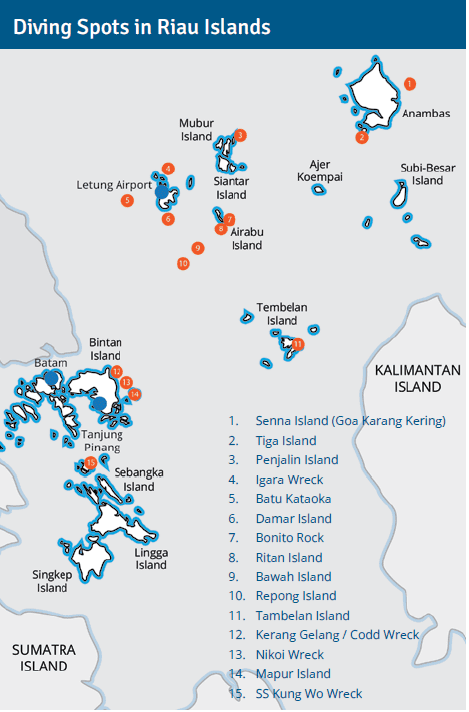 The Riau Islands—comprising Bintan, Batam, Karimun, the Lingga Archipelago, and the Anambas Islands—offer exceptional diving in clear, warm waters with visibility reaching up to 30 meters (100 feet). Vibrant coral reefs filled with sea turtles, rays, and colorful reef fish provide captivating sites for divers of all experience levels. Popular spots like Penyengat Island (Bintan) and Abang Island (Batam) feature a diverse mix of hard and soft corals, sponges, and macro life, including nudibranchs and octopuses. For more advanced divers, the underwater pinnacles and dramatic drop-offs around Pulau Bawah and Sintang Island attract predatory fish and seasonal pelagics, including manta rays and whale sharks. Wreck diving is also a highlight, with sunken ships transformed into thriving marine habitats. Whether exploring shallow coral gardens or drifting along deep reef walls, the Riau Islands promise a rich and varied underwater experience.
How To Get There
- Fly to Batam Hang Nadim International Airport (BTH) or Tanjung Pinang Raja Haji Fisabilillah Airport (TNJ). Continue by a regional flight to Tarempa Letung Airport (LMU) on Jemaja Island
- Ferry from Sri Bintan Pura Harbor in Tanjung Pinang (8 - 9 hours) or from Telaga Punggur Harbour in Batam (8 - 9 hours)
Diving Conditions
The Riau Islands offer clear views of the region’s vibrant and diverse marine ecosystems. They are ideal diving conditions for divers of all skill levels, from calm, protected sites perfect for beginners to deeper, drift dives suited for experienced divers.
Visibility : 10 - 20 m
Best Time : Mar - Oct (Slight surface cooling during northeast monsoon Dec–Feb).
Dive Site and Marine Life Highlights in Riau Islands
The Riau Islands are a diving paradise, known for clear waters, rich coral reefs, and abundant marine life. Dive sites range from pinnacles and drop-offs to dramatic rock formations—perfect for exploration and photography. Expect encounters with reef fish, turtles, manta rays, reef sharks, and even the occasional whale shark. Bawah Island impresses with vibrant reefs and schools of trevally and barracuda, while Bintan features historic wrecks teeming with life. Macro lovers will spot nudibranchs, cuttlefish, and octopuses, ideal for close-up shots. Freedivers can enjoy striking seascapes, though boat support is advised in deeper or current-prone areas.
RIAU ISLANDS
The Riau Islands—comprising Bintan, Batam, Karimun, the Lingga Archipelago, and the Anambas Islands—offer exceptional diving in clear, warm waters with visibility reaching up to 30 meters (100 feet). Vibrant coral reefs filled with sea turtles, rays, and colorful reef fish provide captivating sites for divers of all experience levels. Popular spots like Penyengat Island (Bintan) and Abang Island (Batam) feature a diverse mix of hard and soft corals, sponges, and macro life, including nudibranchs and octopuses. For more advanced divers, the underwater pinnacles and dramatic drop-offs around Pulau Bawah and Sintang Island attract predatory fish and seasonal pelagics, including manta rays and whale sharks. Wreck diving is also a highlight, with sunken ships transformed into thriving marine habitats. Whether exploring shallow coral gardens or drifting along deep reef walls, the Riau Islands promise a rich and varied underwater experience.
How To Get There
- Fly to Batam Hang Nadim International Airport (BTH) or Tanjung Pinang Raja Haji Fisabilillah Airport (TNJ). Continue by a regional flight to Tarempa Letung Airport (LMU) on Jemaja Island
- Ferry from Sri Bintan Pura Harbor in Tanjung Pinang (8 - 9 hours) or from Telaga Punggur Harbour in Batam (8 - 9 hours)
Diving Conditions
The Riau Islands offer clear views of the region’s vibrant and diverse marine ecosystems. They are ideal diving conditions for divers of all skill levels, from calm, protected sites perfect for beginners to deeper, drift dives suited for experienced divers.
Visibility : 10 - 20 m
Best Time : Mar - Oct (Slight surface cooling during northeast monsoon Dec–Feb).
Dive Site and Marine Life Highlights in Riau Islands
The Riau Islands are a diving paradise, known for clear waters, rich coral reefs, and abundant marine life. Dive sites range from pinnacles and drop-offs to dramatic rock formations—perfect for exploration and photography. Expect encounters with reef fish, turtles, manta rays, reef sharks, and even the occasional whale shark. Bawah Island impresses with vibrant reefs and schools of trevally and barracuda, while Bintan features historic wrecks teeming with life. Macro lovers will spot nudibranchs, cuttlefish, and octopuses, ideal for close-up shots. Freedivers can enjoy striking seascapes, though boat support is advised in deeper or current-prone areas.


